
N erve Conduction Velocity (NCV) testing evaluates how effectively and quickly your peripheral nerves transmit electrical signals to your muscles. If you experience persistent numbness, tingling, burning pain, or limb weakness, an NCV study pinpoints the exact site and severity of nerve irritation or compression.
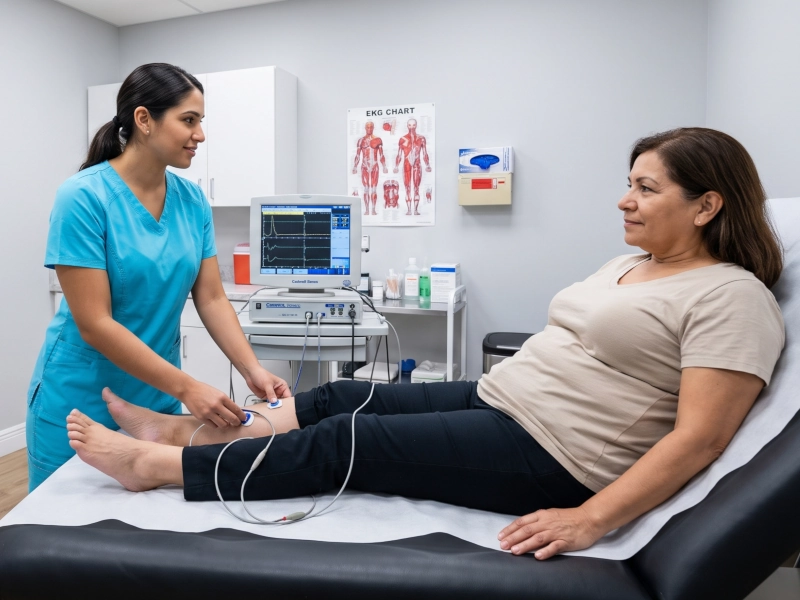
Conducted in an attentive, outpatient-focused setting, our nerve conduction assessments systematically evaluate motor and sensory latency, nerve amplitude, and signal velocity. By isolating specific zones of peripheral compression or systemic neuropathy, we supply your specialist with actionable electrodiagnostic roadmaps to direct targeted therapy and pain relief.
Clinical Conditions Evaluated
Carpal Tunnel Syndrome: Compression of the median nerve at the wrist causing numbness and tingling in the hand and fingers.
Radiculopathy & Sciatica: Irritation of nerve roots in the cervical or lumbar spine causing radiating pain down the arms or legs.
Peripheral Neuropathy: Nerve fiber damage frequently linked to diabetes, metabolic disorders, or past treatments.
Cubital Tunnel Syndrome: Pinched ulnar nerve at the elbow causing numbness in the ring and little fingers.
What to Expect & Testing Guidelines
The sensation: Small sensor patches deliver mild, brief electrical impulses; patients feel a minor static sensation or gentle muscle twitch. It is safe, non-invasive, and well-tolerated.
Clean skin: Do not apply any lotions, oils, or moisturizers to your arms or legs on test day.
Clothing: Wear loose garments that can easily roll up above the knees and elbows.
Warmth: Cold extremities can slow nerve conduction; keep hands and feet warm prior to testing.
Safety alert: Inform our medical staff if you have an implanted cardiac pacemaker or defibrillator.
Duration: The evaluation typically takes 30 to 45 minutes.